
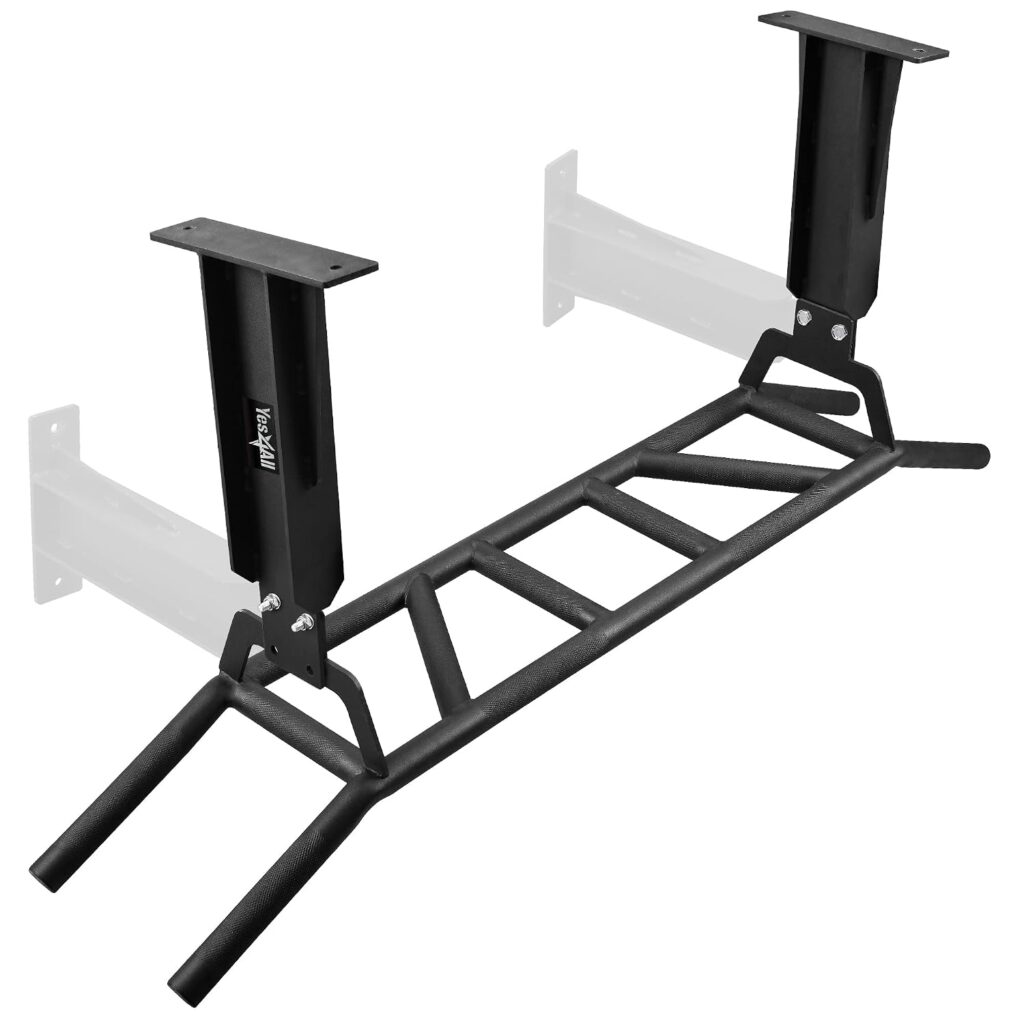
A wall-mounted pull-up bar is one of the smartest upgrades you can make to a home gym. Unlike doorway bars that wobble and slip, a properly anchored wall bar feels like part of the building: rock-solid, more clearance for dynamic moves, and the confidence to train heavy without second-guessing every rep. The good news is you don’t need a premium specialty-retailer bar to get this. Several excellent options ship straight from Amazon, and the best of them rival bars costing two and three times as much.
I focused on the three things that actually matter: how far the bar sits from the wall, how thick and rigid the steel is, and whether the mounting setup fits a normal wall. Here are the ones worth buying.
Quick Picks at a Glance
- Best Overall Value: Yes4All Heavy Duty Wall-Mounted Pull-Up Bar
- Best Pull-Up + Dip Station Combo: OneTwoFit Multifunctional Wall-Mounted Pull-Up Bar
- Best Heavy-Capacity Station: HAKENO Multifunctional Wall-Mounted Pull-Up Bar
- Best for Ceiling/Joist Mounting: Ultimate Body Press Ceiling Mount Pull-Up Bar
Best Overall Value: Yes4All Heavy Duty Wall-Mounted Pull-Up Bar
For most people, this is the bar to buy. The Yes4All proves that wall-mounted quality doesn’t require premium pricing. Often priced under $40, it delivers the stability of permanent mounting at a fraction of the cost of commercial-grade bars, and in side-by-side testing it held up against bars costing three times as much for standard pull-up and chin-up work.
The powder-coated steel resists rust and humidity, making it a solid choice for garages and basements. The multi-grip layout gives you wide, narrow, and neutral hand positions, and the foam-padded grips stay comfortable through long sessions. The bar extends far enough from the wall that your knees won’t scrape on the way up, and once it’s bolted to studs it does not move at all, even during kipping and muscle-up attempts.
What I love: Unbeatable price, genuinely rigid once mounted, multi-grip foam handles, rust-resistant coating.
Keep in mind: Capacity runs lower than premium bars (listed in the 300-pound range), so very heavy users doing weighted work may want more headroom. It mounts to 16-inch or 24-inch stud spacing, so verify your studs first. The included lag bolts are adequate, but many users upgrade to longer bolts for extra peace of mind.
Bottom line: The best value wall-mounted pull-up bar on Amazon. For the vast majority of home gyms, this is all the bar you need.
Best Combo: OneTwoFit Multifunctional Wall-Mounted Pull-Up Bar
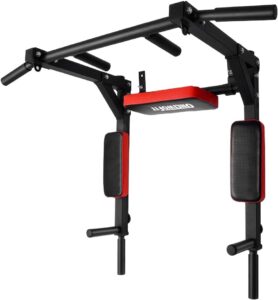
If you want more than just pull-ups, the OneTwoFit turns a blank wall into a full upper-body station. Think of it as a wall-mounted power tower: it delivers the versatility of a floor-standing tower without eating up any floor space. The steel frame supports up to 440 pounds and handles pull-ups, dips, leg raises, and push-ups all from one unit. The dip station is the standout feature, since wall-mounted dip options are rare and genuinely useful for home gym efficiency.
The high-density padding on the back and arm supports matters more than the spec sheet suggests. During hanging leg raises, the cushion spreads pressure across your lower back instead of digging into pressure points.
What I love: Pull-ups and dips in one unit, generous 440-pound capacity, space-saving, thick and heavy steel frame.
Keep in mind: This is the strictest install on the list. It must go into concrete or brick (never drywall, plaster, or cavity walls), and you’ll need a hammer drill with a 12mm masonry bit. It also needs clearance both forward and below, so it can’t tuck into a narrow hallway. Lag bolts for wood installation aren’t included.
Bottom line: The best pull-up-and-dip combo on Amazon, ideal for garage or basement gyms with a solid masonry wall.
Best Heavy-Capacity Station: HAKENO Multifunctional Wall-Mounted Pull-Up Bar
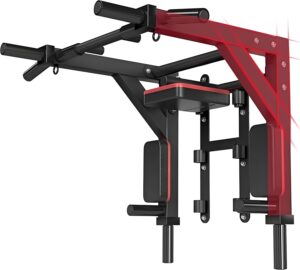
If capacity is your priority, the HAKENO is built for it, with an advertised 800-pound rating. Like the OneTwoFit, it’s a multifunctional wall-mounted station with a dip setup and power-tower-style versatility, but the higher capacity gives bigger lifters and anyone training with a weighted vest a comfortable safety margin.
What I love: Very high listed capacity, multifunction dip and pull-up station, space-saving wall design.
Keep in mind: As with any heavy wall station, that capacity is only real if it’s anchored into a properly solid wall, so treat masonry mounting as mandatory. Always confirm the included hardware suits your specific wall, and upgrade anchors if in doubt.
Bottom line: The pick for heavy users and weighted-vest training who want maximum capacity headroom in a wall-mounted unit.
Ultimate Body Press Ceiling Mount Pull-Up Bar
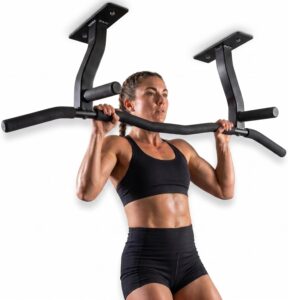
Not every space suits a wall bar. If you’ve got exposed joists in a garage or basement, ceiling mounting sidesteps the leverage worries of a wall bar entirely by working straight against the downward pull of your body. The Ultimate Body Press unit is a cleanly designed, affordable option built for 16- and 24-inch joist spacing, with reversible risers to dial in optimal grip spacing.
What I love: Affordable, strong ceiling-mounted stability, fits standard joist spacing, reversible risers for grip width.
Keep in mind: You need accessible, sound ceiling joists, which not every space has. Ceiling height has to leave room for a full dead hang. It’s a single-bar design, so you don’t get dip or multi-station functionality.
Bottom line: The best choice when wall mounting isn’t practical but you’ve got solid overhead joists to work with.
How to Choose: What Actually Matters
Your wall is the real load limit. A bar is only as strong as what it’s bolted to. Concrete and properly spaced studs are ideal. Never trust drywall anchors, and the heavier multifunction stations (OneTwoFit, HAKENO) genuinely require masonry. If you’re unsure about studs, headers, or load-bearing structure, hire a contractor.
Check your stud or joist spacing first. Most homes use 16-inch centers; older homes and garages sometimes use 24-inch. Grab a stud finder before you buy so you know the bar’s mounting pattern fits.
Capacity vs. how you train. A 300-pound bar is plenty for a 180-pound lifter doing bodyweight reps. If you add a weighted vest or heavy dip belt, size up to the 440- or 800-pound stations.
Simple bar or full station? A single bar (Yes4All, Ultimate Body Press) maximizes simplicity and clearance. A multifunction station (OneTwoFit, HAKENO) adds dips and leg raises but demands more wall, more clearance, and a stronger mounting surface.
Upgrade the hardware if in doubt. Several of these include adequate bolts, but spending a few dollars on longer, higher-grade lag bolts or proper masonry anchors is cheap insurance when your body weight is on the line.