
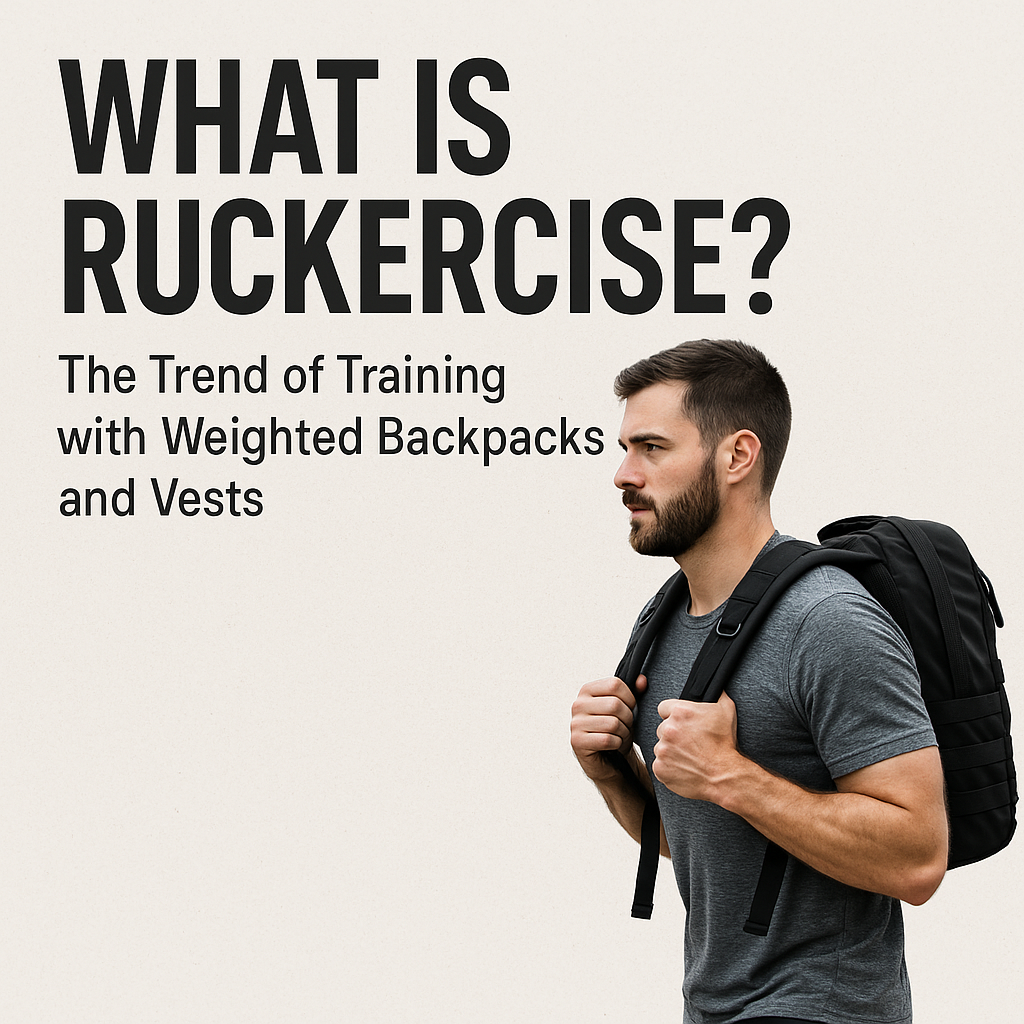
Ruckercise, better known as rucking, is walking with extra weight on your back, usually a loaded backpack or a weighted vest. The name comes from the military “ruck march,” where soldiers hike with a loaded rucksack. It turns an ordinary walk into a low-impact workout that builds strength and cardio at the same time, and all you need to start is a sturdy backpack and 10 to 15 pounds.
Disclosure: This article contains affiliate links. As an Amazon Associate I earn from qualifying purchases, at no extra cost to you.
OUR PICKS
Ready to start? The gear we’d buy

Polyfit Rucking Starter Kit
Rucking backpack plus a 10 lb plate, sternum strap, and extra load straps in one box. Holds up to 40 lb. $$$

GORUCK Rucker 4.0 (20L)
Purpose-built ruck with an elevated plate pocket, extra-padded straps, and room to scale up to 75 lb. $$$$

WOLF TACTICAL Weighted Backpack
Fits standard 10×12 cast iron plates up to 40 lb, with padded straps and a chest strap. $

Yes4All 10 lb Ruck Weight
Cast iron plate with rounded edges and wide handles. Strap slots let you combine plates later. $
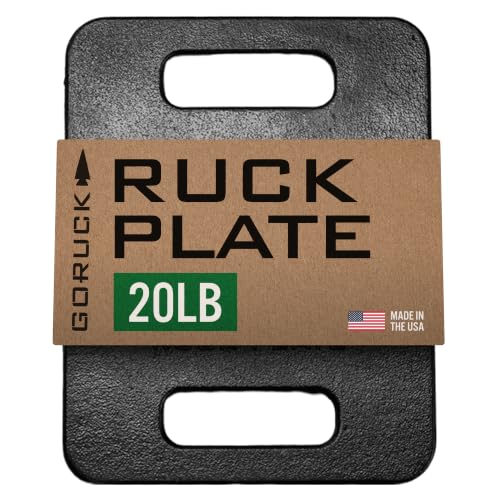
GORUCK Ruck Plate 20 lb
USA-made cast iron plate sized for the Rucker and Ruck Plate Carrier. GORUCK suggests starting at 20 lb. $$

ZELUS Weighted Vest
Iron-sand vest in 6 to 30 lb sizes with reflective stripes, a phone pocket, and adjustable straps. $
Price guide: $ budget · $$ mid-range · $$$ premium · $$$$ top-end. Tiers reflect Amazon prices when we wrote this and can change. Tap through for today’s price. Full breakdowns are in Gear to start rucking.
THE BASICS
What is ruckercise?
Ruckercise is one of the fastest-growing fitness trends because it blends strength and cardio into one workout. The word “ruck” comes from rucksack, and military units have used loaded marches for generations to build tough, durable soldiers. In civilian terms, it’s as simple as putting weight in a backpack or wearing a weighted vest and walking with purpose.
Unlike many trends, ruckercise is accessible, affordable, and scalable. You can do it on your neighborhood sidewalk, a hiking trail, a treadmill, or while pushing the stroller. Add weight when it gets easy, and drop weight on recovery days. That’s why it’s so popular with busy dads who want a workout that fits into a walk they’re already taking.
WHY DO IT
The benefits of ruckercise
- More work than a regular walk. Carrying extra weight makes your heart, lungs, and legs work harder at the same pace, so you burn more calories than walking without weight.
- Easier on joints than running. You’re still walking, so there’s no repeated pounding from running strides.
- Builds strength and endurance at the same time. Your legs, glutes, core, upper back, and shoulders all work to carry and stabilize the load.
- Better posture and core stability. A load held high and tight on your back encourages you to stand tall and brace your trunk.
- Functional fitness. It mirrors real life: carrying kids, groceries, luggage, or a pack on a hike.
- Scalable resistance. Add or remove a plate and the workout changes, with no gym membership needed.
- Easy to stick with. It’s low-skill, you can do it outside, and you can talk while you ruck, so it’s easy to bring a friend or partner.
STEP BY STEP
How to start rucking
- Pick a starting weight. Start with 10 to 15 lb, or about 5 to 10% of your body weight, whichever is lighter. It should feel noticeable but easy for the first rucks. Overloading too soon is the most common way beginners end up with sore backs and shoulders.
- Pack it high and tight. Put the weight high on your back and close to your spine. A flat ruck plate in a dedicated pocket works best. If you’re using books, water jugs, or a sandbag, wrap them in a towel so nothing shifts or bounces.
- Adjust the fit. Snug the shoulder straps so the pack doesn’t sag, and clip the chest strap. If your pack has a hip belt, use it to take some of the load off your shoulders.
- Walk 20 to 30 minutes, 2 to 3 times a week. Use a brisk, comfortable pace on flat ground. You should be able to hold a conversation.
- Progress one thing at a time. Each week, add a little distance or a little weight, not both. A good rule is about 10% per week. Once you can comfortably ruck 2 to 3 miles, add hills, stairs, or a few more pounds.
Form and safety tips
- Stand tall. Keep your chest up and core lightly braced. Don’t lean forward from the waist to balance the load.
- Keep your normal stride. Short, quick steps are better than long, reaching ones, especially downhill.
- Don’t run with heavy weight. Running with a loaded pack multiplies the impact on your knees and back. Keep it a walk.
- Wear supportive shoes. Your regular walking shoes or trail shoes are fine to start. Check for hot spots and blisters after longer rucks.
- Stay hydrated. Bring water on longer rucks, especially in the heat.
- Back off if something hurts. Muscle fatigue is normal. Sharp pain or numbness in your shoulders or hands is not. Lighten the load or adjust the straps.
If you have back, knee, or heart problems, check with your doctor before adding weight to your walks.
FOLLOW ALONG
30-day beginner rucking routine
Ruck every other day and use the days in between for rest, light stretching, or an easy unweighted walk. If a week feels hard, repeat it before moving on.
| Week | Weight | Distance per ruck | Ruck days | Focus |
|---|---|---|---|---|
| Week 1 | 10–12 lb | 1.0–1.5 miles | 4 rucks (days 1, 3, 5, 7) | Easy pace. Focus on posture and strap fit. |
| Week 2 | 15 lb | 1.2–1.8 miles | 3 rucks (days 9, 11, 13) | First weight jump. Keep the pace steady. |
| Week 3 | 18–20 lb | 1.5–2.2 miles | 4 rucks (days 15, 17, 19, 21) | Hit the 2-mile and 20 lb milestones. |
| Week 4 | 22–25 lb | 2.0–3.0 miles | 5 rucks (days 23, 25, 27, 29, 30) | Finish with a 3-mile ruck at 25 lb. |
Expect roughly 20 to 25 minutes per mile at a brisk rucking pace. Lighter dads can scale every weight down. The goal is finishing each ruck with good posture.
AT A GLANCE
Ruckercise vs. walking vs. running: which is better?
Many people find rucking while looking for a low-impact alternative to running. Here’s how the three compare.
| Walking | Rucking | Running | |
|---|---|---|---|
| Impact on joints | Low | Low to moderate (still walking) | High (repeated landing) |
| Intensity | Easy to moderate | Moderate to hard, depending on load and hills | Moderate to very hard |
| Strength building | Minimal | Legs, core, upper back, shoulders | Mostly legs, cardio-focused |
| Calories burned | Lowest | More than walking at the same pace | Most per minute |
| Gear needed | Shoes | Backpack or vest plus weight | Running shoes |
| Best for | Recovery, beginners, daily steps | Strength plus cardio with low impact | Speed and cardio endurance |
Bottom line: if you want speed and cardio endurance, running is hard to beat. If you want a full-body workout that’s easier on your joints, ruckercise may be the smarter option. Many people do both: ruck on most days and run once or twice a week. Prefer cardio at home? See our zone 2 walking workout and our jump rope vs. running comparison.
YOUR OPTIONS
Types of ruck gear
You can ruck with almost any durable backpack, but purpose-built gear is more comfortable and keeps the weight where it should be. For more budget pack options, see our guide to affordable ruck backpacks.
1. Standard backpack
Great for your first few rucks. Load it with books, water bottles, or a bag of rice wrapped in a towel. Look for padded shoulder straps and a chest or waist strap.
2. Weighted ruck plates
Flat cast iron plates designed to sit upright inside a pack. They keep the weight high and close to your back and don’t shift like loose items.
3. Sandbags or water bags
Budget-friendly and adjustable. A small sandbag or a filled water bladder works well for home rucking, and you can pour water out on a hot day to lighten the load.
4. Weighted vests
An alternative to backpacks. A vest spreads weight across your chest and back, which works well for bodyweight moves like squats, push-ups, and pull-ups. Compare more options in our best weighted vests guide.
5. Specialized ruck packs
Brands like GORUCK make tough packs with dedicated plate pockets, extra-padded straps, and grab handles. They’re built for comfort over long distances and heavier loads.
THE PICKS
Gear to start rucking
How we chose: we compared manufacturer specs and current Amazon listings for comfort features, weight capacity, and value at each price tier. We haven’t hands-on tested these products.
Polyfit Rucking Starter Kit: everything in one box
Price tier: $$$
If you want to buy once and start rucking tomorrow, this kit includes the Polyfit Rucking Backpack 2.0, a 10 lb rucking weight plate, a detachable sternum strap, removable rucking straps for extra load support, and a hang loop for storage. The side-loading design lets you slide plates in and out, and an internal buckle locks them in place so they don’t shift. It holds up to 40 lb and fits plates up to 10 x 12 inches.
Best for: Beginners who want a proper ruck pack and a plate without matching sizes themselves.
Pros
- Pack and 10 lb plate included
- Holds up to 40 lb as you progress
- Side-loading plate pocket with internal buckle
- Padded straps and breathable back panel
Cons
- Polyfit says it fits XS to L; XL or tall frames may find it snug
- Only one 10 lb plate included, so you’ll buy more weight later
- Higher tier than building your own setup
GORUCK Rucker 4.0: the pack that made rucking popular
Price tier: $$$$
GORUCK’s Rucker is purpose-built for carrying weight. An elevated pocket keeps ruck plates high and stable on your back, and the wide, extra-padded straps are made from two heat-laminated foams. Raised lumbar padding, a built-in frame sheet, MOLLE webbing, multiple handles, and a 1000D CORDURA build round it out. It holds up to 75 lb of ruck plates, and GORUCK recommends starting at 20 lb. The 20L size also works as an everyday bag.
Best for: Dads who are committed to rucking for the long haul and want the most comfortable carry.
Pros
- Elevated plate pocket keeps weight high and stable
- Very wide, padded straps
- Scales up to 75 lb of plates
- Doubles as an everyday or travel pack
Cons
- Top-end tier, and plates are sold separately
- Designed around GORUCK plates
- More pack than a casual rucker needs
WOLF TACTICAL Weighted Backpack: the cheapest real ruck pack
Price tier: $
WOLF TACTICAL’s pack is a no-frills way to get a plate-ready ruck. It’s designed to fit WOLF TACTICAL vest plates and standard 10 x 12 inch cast iron plates up to 40 lb. You get thick breathable padding, adjustable shoulder and chest straps, laser-cut MOLLE webbing, and a low-profile zippered pocket for your phone and keys. It’s made from 600D Oxford polyester.
Best for: Dads who want to try rucking without a big upfront spend.
Pros
- Lowest tier of any pack here
- Fits standard 10 x 12 inch plates
- Chest strap helps keep the load stable
- Small zip pocket for phone and wallet
Cons
- Plates sold separately
- 40 lb max capacity
- Lighter fabric than the GORUCK’s CORDURA
Yes4All 10 lb Ruck Weight: a simple first plate
Price tier: $
This 10 lb cast iron plate has wide handles on both ends, four rounded edges to protect your bag, and recessed sides with strap slots, so you can stack and strap two plates together as you get stronger. Yes4All says it fits standard laptop compartments, so it can go in a regular backpack too.
Best for: Anyone rucking with a pack they already own, or adding weight to a budget pack.
Pros
- Lowest tier way to add proper ruck weight
- Rounded edges protect your pack
- Stackable with strap slots
- Sold by Amazon
Cons
- 10 lb is only a starting load
- Exact dimensions aren’t listed, so check your pack’s pocket size
GORUCK Ruck Plate 20 lb: built for the Rucker
Price tier: $$
GORUCK’s plates are designed to fit the Rucker and Ruck Plate Carrier snugly. They’re cast iron with a rust-resistant powder coating, rounded edges, and wide grab handles, and GORUCK says they have a break strength of over 90,000 lb. They’re made in Minnesota.
Best for: Rucker owners, or anyone who wants a plate that will last for years.
Pros
- Made for GORUCK packs
- Powder-coated cast iron
- Wide handles and rounded edges
- Made in the USA
Cons
- Higher tier than generic plates
- Sized for GORUCK packs, so check fit in other bags
ZELUS Weighted Vest: ruck without a backpack
Price tier: $
If you’d rather spread the weight across your chest and back, the ZELUS vest comes in 6, 8, 12, 16, 20, 25, and 30 lb versions filled with iron sand. Adjustable buckle straps fit chest sizes from 31.5 to 45 inches, reflective strips help on early-morning walks, and there’s an armband pouch and rear mesh pocket for your phone and keys.
Best for: Dads who want to mix rucking with squats, push-ups, and pull-ups, or who don’t like straps on their shoulders.
Pros
- Lowest tier pick here
- Wide range of fixed weights
- Reflective strips for low-light walks
- Good for bodyweight circuits too
Cons
- Fixed weight, so you buy a new vest to go heavier
- Fits chest sizes 31.5 to 45 inches only
- Listed variant is 12 lb; pick your weight on Amazon
ONCE YOU’VE GOT THE BASICS
Specific ruckercise workouts
Once you’ve finished the 30-day plan, mix in one or two of these each week.
Beginner ruck walk
10–15 lb backpack
- Walk 2 miles at a steady pace
- Cool down with light stretching
Strength + ruck combo
20 lb backpack
- 1-mile walk or hike
- 20 squats with the pack on
- 20 walking lunges (10 each leg)
- 15 push-ups with hands on the pack
- Repeat 2–3 times
Ruck intervals (cardio burn)
15–25 lb backpack
- 5 minutes brisk walk
- 2 minutes faster walk or hill
- Repeat 6–8 rounds
- Total: 40–50 minutes
Hill or stair ruck
20–30 lb backpack
- 20 minutes walking uphill or up stairs
- Every 5 minutes: 15 squats or step-ups
- Builds leg strength and endurance
Weighted vest circuit
10–20 lb vest
- 15 squats
- 15 push-ups
- 10 burpees
- 1-minute plank
- 400 m fast walk
- Repeat 3–4 rounds
We changed the jog in the interval workout to a faster walk or hill: running with a loaded pack adds a lot of impact.
FAQ
FAQ: Ruckercise basics
How much weight should I start with in ruckercise?
Most beginners should start with 10 to 15 lb, or about 5 to 10% of their body weight. Overloading too soon can cause back and joint pain. Add weight slowly, about 10% a week.
Is ruckercise safe for beginners?
Yes. Rucking is just walking with weight, so it’s one of the most beginner-friendly workouts there is. Start light and short, and increase distance and weight gradually. Check with your doctor first if you have back, knee, or heart issues.
What’s the difference between rucking with a backpack and using a weighted vest?
A backpack carries the weight on your back and shoulders, which feels natural for walking and hiking and makes it easy to add plates. A weighted vest spreads the weight across your chest and back, which works well for bodyweight circuits. Both work. It comes down to preference.
Is rucking good for weight loss?
Rucking burns more calories than walking at the same pace because you’re moving more total weight, and it’s easy to do often. Combined with a sensible diet, it’s a great tool for fat loss. How much you burn depends on your body weight, the load, your speed, and the terrain.
Can I do ruckercise every day?
Light rucks with moderate weight can be done most days. Keep heavy rucks and strength-focused circuits to 2 or 3 times a week so your body can recover.
Do I need special gear to start ruckercise?
No. You can start with any sturdy backpack and books or water bottles. A pack with a plate pocket and a proper ruck plate is more comfortable for regular training, which is why we listed our top gear picks above.
What shoes should I wear for rucking?
Supportive walking shoes or trail shoes are fine for most beginners. Some people prefer hiking boots for rough trails or heavier loads. Whatever you wear, check your feet for hot spots after longer rucks.
Can I ruck on a treadmill?
Yes. A treadmill or incline walking pad is a good option in bad weather, and an incline adds intensity without adding weight. See our best incline walking pads.
FINAL THOUGHTS
Start light, walk often
Ruckercise takes the simple act of walking and turns it into a full-body workout. Start with 10 to 15 lb, follow the 30-day plan, and add weight slowly. Want everything in one box? The Polyfit Starter Kit $$$. Ready to invest? The GORUCK Rucker 4.0 $$$$ with a 20 lb plate $$. On a tight budget? The WOLF TACTICAL pack $ with a Yes4All plate $. Prefer a vest? The ZELUS $.
Building out the rest of your routine? See our affordable ruck backpacks, best weighted vests, zone 2 walking workout, and budget home gym starter kit for new dads.
Tap through to Amazon for today’s price and shipping. As an Amazon Associate I earn from qualifying purchases. Specs are from manufacturer listings and can change, so confirm the details on Amazon before you buy. This article is general fitness information, not personalized medical advice. We have not hands-on tested these products.