

Wall-Mounted vs Doorway vs Ceiling Pull-Up Bars: Which One Should Dads Buy?
A pull-up bar is one of the cheapest, most useful things you can add to a home gym. The hard part isn’t the bar, it’s the mount. This guide is for dads deciding between a no-drill doorway bar, a bolted-in wall-mounted bar, and a ceiling-mounted bar for the garage, basement, or spare room.
Disclosure: This article contains affiliate links. As an Amazon Associate I earn from qualifying purchases.

THE SHORTLIST
Quick picks
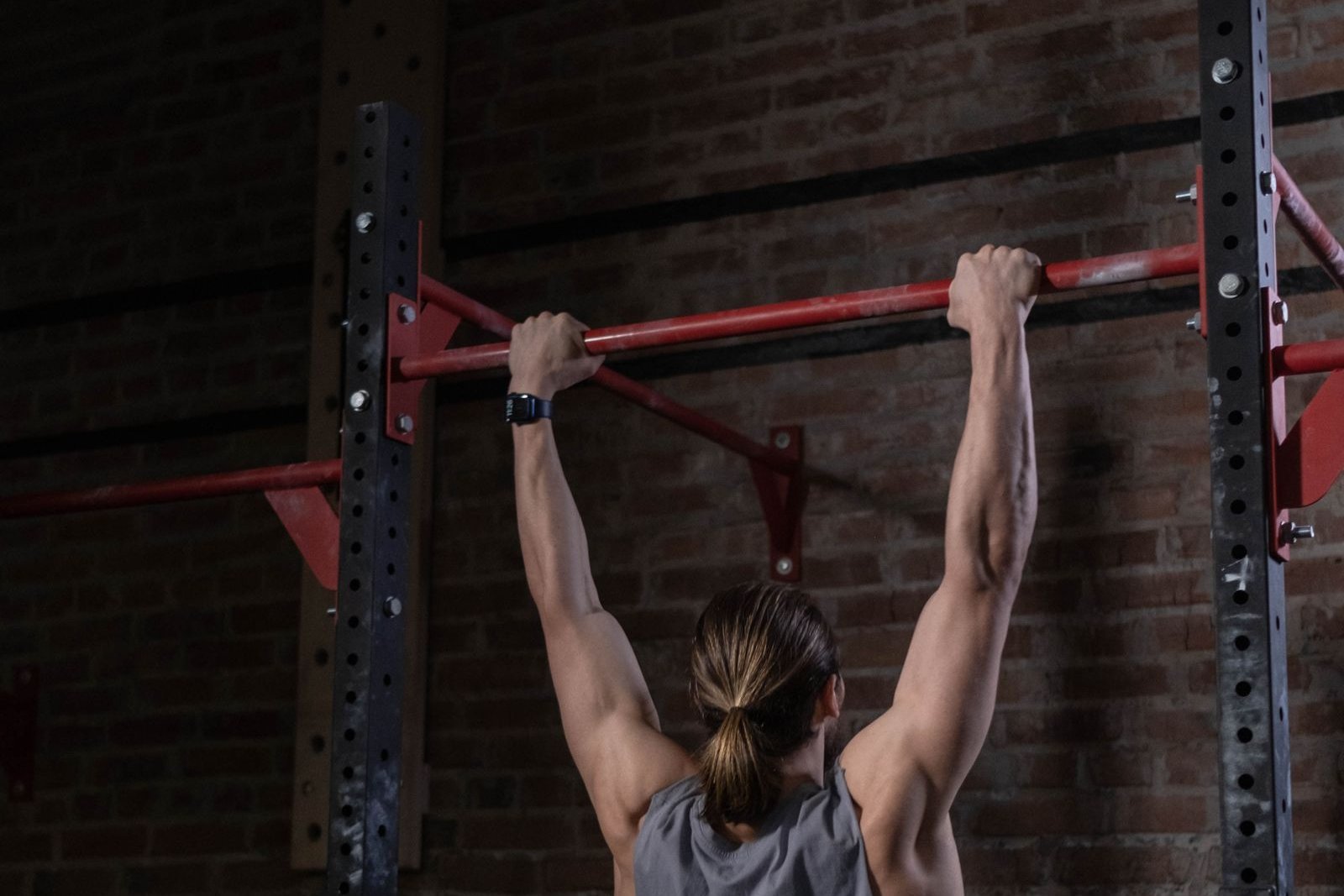
Short version: renters and “I’m not drilling anything” dads should start with a doorway bar. Homeowners with a garage or basement wall should go wall-mounted. If your best open floor space is in the middle of a room, or you want the most freedom to swing your legs and add rings or straps, go ceiling.
Heads up: we haven’t hands-on tested these. This comparison is based on manufacturer specs, current Amazon listings, and what reputable reviewers and owners report.

Iron Gym Total Upper Body Workout Bar
The cheapest pick here $. A leverage-style bar that hooks over your door trim, comes off in seconds, and flips to the floor for push-ups and dips.

Yes4All Wall Mounted Pull Up Bar
A budget pick $. Powder-coated steel, multiple foam grips, fits 16″ or 24″ stud spacing, and a listed 500 lb capacity when properly installed.

Ultimate Body Press Ceiling Mount
Still budget-tier $, but the priciest pick here. Reversible risers fit 16″ or 24″ joists, and the bar hangs 14″ below the ceiling.
QUICK COMPARISON
Doorway vs wall-mounted vs ceiling at a glance
| Feature | Doorway (Iron Gym) | Wall (Yes4All) | Wall (Ultimate Body Press) | Ceiling (Ultimate Body Press) |
|---|---|---|---|---|
| Price tier | $ lowest of the group | $ budget | $ budget | $ highest of the group |
| Drilling needed? | No, leverage against door trim | Yes, into wall studs | Yes, into 16″ on-center studs | Yes, into ceiling or floor joists |
| Fits | Doorways 24–32″ wide recommended | 16″ and 24″ stud spacing | 16″ on-center studs only | 16″ or 24″ joists (reversible risers) |
| Listed capacity | 300 lb | 500 lb (properly installed) | Not stated on the listing | 300 lb max recommendation |
| Clearance / drop | Bar sits just inside the door opening | Check listing for wall clearance | 14–21″ off the wall | Hangs 14″ below the ceiling |
| Grips | Narrow, wide, and neutral | Multiple foam grips | 4 positions (10, 16, 24, 36″ apart) | 4 positions, 20″ neutral grips |
| Best for | Renters, small homes, travel | Garage or basement on a tight budget | Wide-grip work with more room off the wall | Open rooms, rings and straps, leg raises |
| Check today’s price | Iron Gym on Amazon ↗ | Yes4All on Amazon ↗ | UBP Wall Mount on Amazon ↗ | UBP Ceiling Mount on Amazon ↗ |
Price guide: $ budget · $$ mid-range · $$$ premium · $$$$ top-end. Every bar in this guide lands in the budget tier; “lowest” and “highest” are relative to each other. Tap through for today’s price on Amazon, and confirm the exact listing, shipping, and in-stock status before you buy.
THE REAL DECISION
Doorway vs wall vs ceiling: what actually changes
Doorway bars: easiest start, most compromises
Leverage-style doorway bars like the Iron Gym hook over the trim above your door and press against the frame. No tools, no holes, and you can take it down after every workout. The trade-off is that all your weight goes into door trim that was never built to hold a grown man. Owners and reviewers commonly report dents or scuffs on soft or MDF trim, and a bar that feels less stable during anything that swings. Strict pull-ups, chin-ups, and hanging knee raises are fine; kipping is not.
Wall-mounted bars: the sweet spot for most homeowners
A wall bar bolts into two studs and stays put. You get a rock-steady bar, more grip options, and room to add straps or a suspension trainer. You’ll need a stud finder, a drill, the right bit, and a socket or wrench. The main limit is wall clearance: the closer the bar is to the wall, the more your knees, face, or feet can bump it. Look for generous clearance if you’re tall or like wide-grip work.
Ceiling-mounted bars: most freedom, trickiest install
A ceiling bar bolts into joists, so you can put it in the middle of a room with open space all around. That’s great for hanging leg raises, rings, and straps. The catch is height. Ultimate Body Press’s reversible-riser bar drops 14″ from the ceiling, so on a standard 8-foot ceiling the bar ends up around 82″ (about 6’10”) off the floor. That works for most dads, but taller guys will be bending their knees, and lower basement ceilings may not leave enough headroom to pull your chin over the bar. Ceiling installs also mean drilling overhead, ideally with a helper.
THE PICKS
What to know before you click “Buy”
Iron Gym Total Upper Body Workout Bar: the no-drill starter
The Iron Gym is the classic doorway bar. It uses leverage to hold against the door frame, so there are no screws, and Iron Gym lists a 300 lb capacity. You get narrow, wide, and neutral grip positions, and you can set it on the floor for push-ups, dips, and sit-ups. Iron Gym says the doorway should be 24 to 32 inches wide. It’s the cheapest bar in this guide $.
Who it’s for: renters, dads who can’t drill, and anyone who wants to try pull-ups before committing to a mounted bar.
Pros
- Lowest price of the group and no tools or holes
- Comes off in seconds, so it can move between rooms or go on a trip
- Three grip positions plus floor use for push-ups and dips
Cons
- Presses on your door trim; reviewers commonly report dents or paint scuffs on soft or MDF trim
- Won’t work on every doorway (metal frames, very thin trim, or unusual widths)
- Limited room for leg raises, and no kipping or swinging
- Lower listed capacity than the wall-mounted Yes4All
Doorway alternative: a screw-in bar
Want a doorway bar that doesn’t lean on your trim? The Garren Fitness Maximiza (budget $) is a telescoping bar that sits in screw-in cups inside the door frame. Garren lists a 300 lb capacity, a fit for 27–39″ solid wood frames with trim at least 1″ thick, and three sets of mounts so you can move it between doorways. You’ll leave small screw holes, but nothing hooks over the molding. It costs a bit more than the Iron Gym on Amazon today.
Yes4All Wall Mounted Pull Up Bar: the budget bolt-in
If you own your place and have a garage, basement, or spare-room wall, this is the simple upgrade from a doorway bar. Yes4All lists heavy-gauge steel with a black powder-coated finish, multiple foam-padded grips, mounting hardware for 16″ and 24″ stud spacing, and a 500 lb capacity when properly installed. It’s a budget pick $, only a little more than the Iron Gym on Amazon today.
Who it’s for: homeowners who want a solid, always-ready bar without spending much.
Pros
- Bolted to studs, so it’s far steadier than a doorway bar
- Highest listed capacity in this guide
- Works with 16″ or 24″ stud spacing
- No door trim involved at all
Cons
- Permanent holes in the wall
- The listing doesn’t spell out wall clearance, so check the product photos and Q&A if you’re tall
- You need a drill, a stud finder, and some patience
Ultimate Body Press Wall Mount: more room off the wall
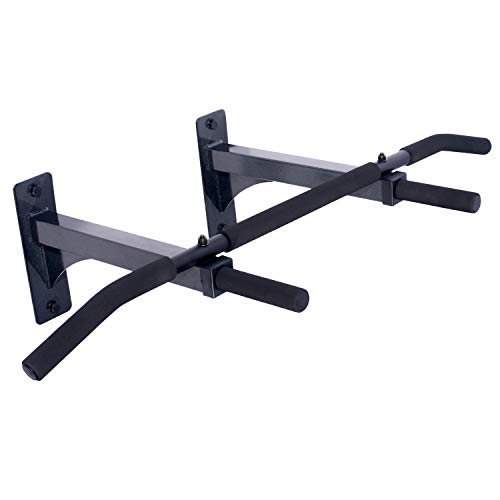
Ultimate Body Press’s wall bar is built around clearance. The listing calls out 14–21″ of wall clearance, a 42″ single-piece bar, and four foam grip positions spaced 10, 16, 24, and 36 inches apart, so you can do both narrow and true wide-grip pull-ups. It mounts to 16″ on-center studs and ships with hardware and a mounting template. It’s budget-tier $, though it costs more than the Yes4All on Amazon today.
Who it’s for: taller dads or anyone who keeps bumping the wall on a basic bar and wants more grip variety.
Pros
- Generous listed wall clearance for a fuller range of motion
- Four clearly spaced grips, including true wide grip
- Mounting template included; Ultimate Body Press says a typical install takes about 30 minutes
Cons
- Fits 16″ on-center studs only
- The Amazon listing doesn’t state a weight capacity
- Amazon showed this one shipping on a lead time rather than in stock when we checked
Ultimate Body Press Ceiling Mount: the open-room pick
This ceiling bar’s patented reversible risers flip to mount under 16″ floor joists or 24″ ceiling joists. The bar drops 14″ from the ceiling, has 20″ spacing on the neutral grips, and offers four foam grip positions with angled ends. Amazon lists a 300 lb maximum weight recommendation. It’s still budget-tier $, but it’s the priciest bar in this guide.
Who it’s for: dads with an open garage, basement, or bonus room who want to hang rings or straps and do leg raises without a wall in the way.
Pros
- Put it anywhere there’s a joist, not just against a wall
- Fits both common joist spacings
- Angled grips and neutral handles add variety
- Great anchor point for a suspension trainer
Cons
- Drilling overhead is harder; plan on a helper
- On an 8-foot ceiling the bar sits around 6’10”, so very tall dads will bend their knees
- Low ceilings may not leave enough headroom to get your chin over the bar
- Some reviewers find the neutral grips a little narrow
BUY SMARTER
How to choose the right pull-up bar mount
- Do you rent or own? Renters: doorway bar, full stop. Homeowners: a wall or ceiling bar is steadier and saves your door trim.
- Find your studs or joists first. Use a stud finder and measure the spacing. Ultimate Body Press notes most walls have studs 16″ apart, and ceiling joists are usually 16″ with a floor above or 24″ on the top floor. Buy a bar that matches what you have.
- Measure your height. You need to hang with arms straight and still get your chin over the bar without hitting the ceiling. For a ceiling bar, subtract the drop from your ceiling height. For a wall bar, think about how high you can mount it on the wall.
- Check clearance. More distance from the wall means fewer knees and noses bumping drywall, especially for wide-grip work.
- Check your door trim (doorway bars). Press a fingernail into the molding. If it dents easily or flexes, a leverage bar will probably mark it. Consider a screw-in bar or a mounted bar instead.
- Plan for progress. Can’t do a pull-up yet? Add resistance bands for assisted reps. Getting strong? A weighted vest makes bodyweight pull-ups harder.
- Can’t drill at all and don’t trust your doors? A freestanding pull-up station or power tower needs no holes, just floor space.
Want more options? See our full roundup of the best wall-mounted pull-up bars, our guide to foldable pull-up bars, and, if you’d rather go all in, squat racks for low ceilings that include a pull-up bar.
FAQ
Questions before you buy
Is a wall-mounted pull-up bar better than a doorway bar?
For most homeowners, yes. A wall bar bolts into studs, so it’s steadier, offers more grip options, and doesn’t put pressure on your door trim. A doorway bar wins if you rent, can’t drill, or want to move the bar around.
Will a doorway pull-up bar damage my door frame?
It can. Leverage bars press on the trim above the door, and owners commonly report dents or paint scuffs, especially on soft or MDF trim. Use your sturdiest door, put a towel under the contact points, avoid kipping, and remove the bar between sessions.
Is a ceiling or wall pull-up bar better?
A wall bar is a bit easier to install and works great against a garage or basement wall. A ceiling bar lets you train in the middle of a room with space all around, which is better for leg raises, rings, and straps, but it needs enough ceiling height.
How high should a pull-up bar be?
High enough that you can hang with straight arms and pull your chin over the bar without hitting the ceiling. On an 8-foot ceiling, a bar with a 14″ drop sits around 82″ (about 6’10”) off the floor, which works for most people; taller dads may bend their knees.
Can I mount a pull-up bar into drywall alone?
No. Wall and ceiling bars need to bolt into wood studs or joists. Drywall anchors alone won’t hold your bodyweight. Find your studs with a stud finder and follow the manufacturer’s instructions.
What do I need to install a wall or ceiling bar?
Usually a stud finder, power drill, the right drill bit, a socket and wrench, a level, a pencil, and a tape measure. Ultimate Body Press lists a 5/16″ bit and a 17mm socket and wrench for its bars. Check your bar’s instructions before you start.
FINAL TAKE
The verdict
For most dads who own their home, a wall-mounted bar is the best buy. The Yes4All Wall Mounted Pull Up Bar $ is steady, cheap, fits both common stud spacings, and saves your door trim. Step up to the Ultimate Body Press Wall Mount $ if you want more clearance and true wide grips.
Renting or can’t drill? The Iron Gym $ is the cheapest way to start. Training in an open room with 8-foot ceilings or higher? The Ultimate Body Press Ceiling Mount $ gives you the most freedom.
Tap through to Amazon for today’s price and shipping. As an Amazon Associate I earn from qualifying purchases. Healthy Dad Project may also earn a commission on purchases made through other links on this page at no extra cost to you. This article is for general fitness information and is not personalized medical advice. Always follow the manufacturer’s installation instructions. We have not hands-on tested these pull-up bars.